To judge white ink hiding power of corrugated printers, test dark kraft boards, full white uniformity and thin/thick boards. Check 4 key hardware: independent white ink channel, circulation system, multi-layer overprint and variable-drop printheads. Use high-concentration white ink. Yili PJS2800 meets all standards with stable, full coverage.
Many manufacturers in the market claim their machines can print with white ink. However, numerous business owners have encountered a common pitfall: after purchasing the equipment, they find the white ink has extremely poor hiding power and is practically useless. When printing base colors on dark yellow kraft corrugated boards, ink seepage through the substrate is unavoidable, forcing an extra pre-coating white process that doubles consumable and labor costs. When selecting digital corrugated printing machines with white ink function, hiding power is the core performance indicator—never rely solely on sales representatives’ verbal promises. Below is a complete on-site machine testing procedure for accurate evaluation, along with an explanation of how machine structure impacts hiding power, illustrated by the Yili PJS2800 Scanning Digital Corrugated Printer with White Ink & Full-Color Printing.
I. Three Mandatory On-Site Printing Tests for Intuitive Evaluation
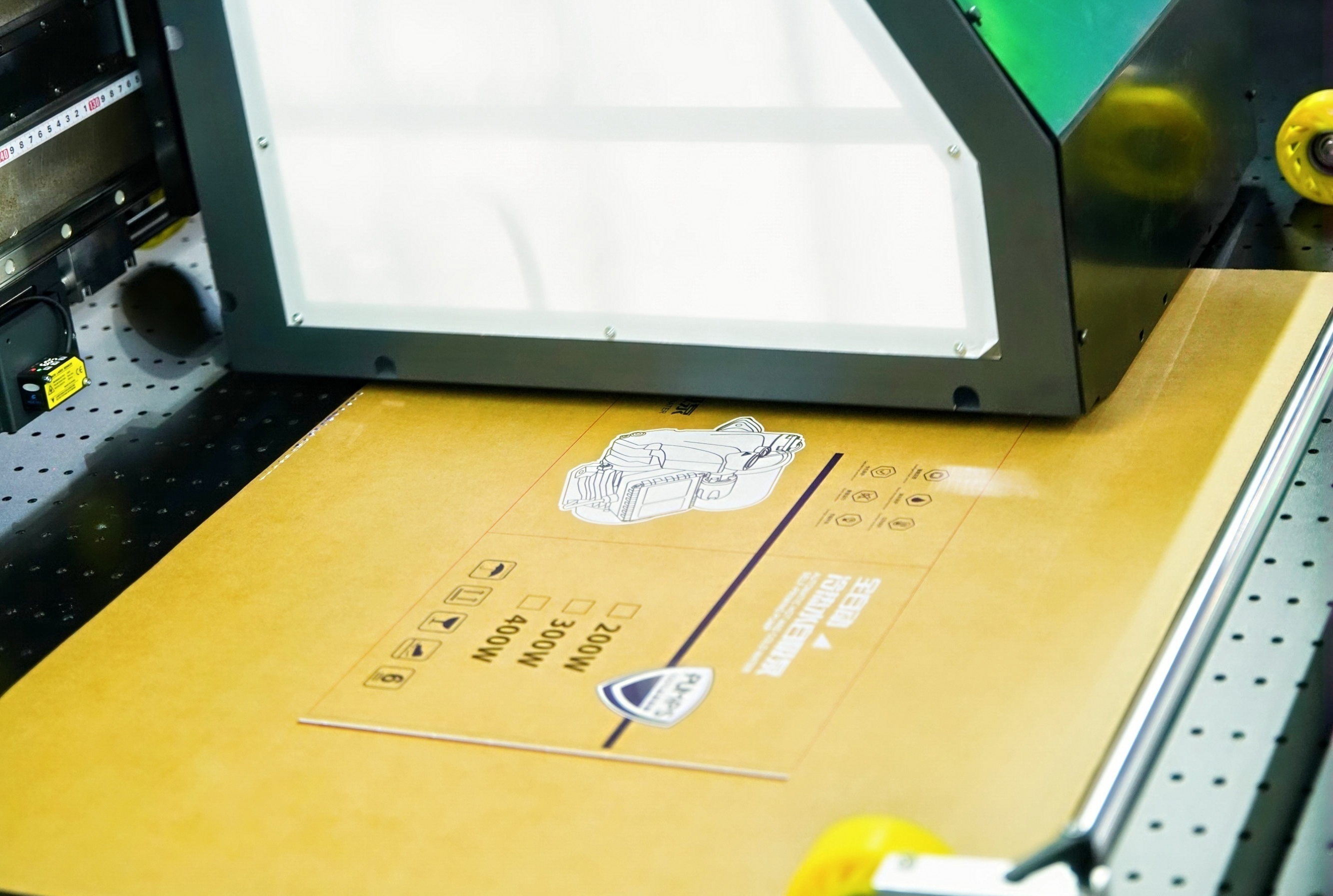
1. Rigorous Test on Dark Yellow Kraft Corrugated Boards (Core Inspection Item)
Always print samples on dark or mottled yellow kraft corrugated boards.
Test Protocol: Print CMYK full-color graphics over a large solid white ink layer in one single pass without pre-coating.
Compliance Standard: The board’s base color is fully covered; no yellowing or ink seepage along graphic edges, and no uneven mottling when viewed at an oblique angle.
The Yili PJS2800 features an independent 5-color channel (CMYK+W) for synchronous white and color printing, paired with an algorithm for multi-layer white ink overprinting that delivers precise control over white ink output. It achieves full hiding on dark yellow kraft boards in one pass with no pre-coating required, showcasing a stark performance gap compared with ordinary machines during on-site sample printing.
2. Uniformity Test for Full-Sheet Solid White Ink
Print a full-page solid white ink layer and inspect the surface for substrate show-through, streaks, or uneven color patches. Machines with substandard hiding power suffer unstable white ink supply pressure and fluctuating ink volume, resulting in streaks and ink seepage. Premium equipment is equipped with a stable ink supply system and built-in white ink circulation system, which maintains consistent ink composition and prevents pigment sedimentation and stratification, yielding a flawless, even full white print surface.
Low-cost stripped-down models lack white ink stirring and internal circulation components. Once ink pigments settle, pale blotches form during printing, drastically reducing hiding power.
3. Dual-Substrate Test for Thin & Thick Boards
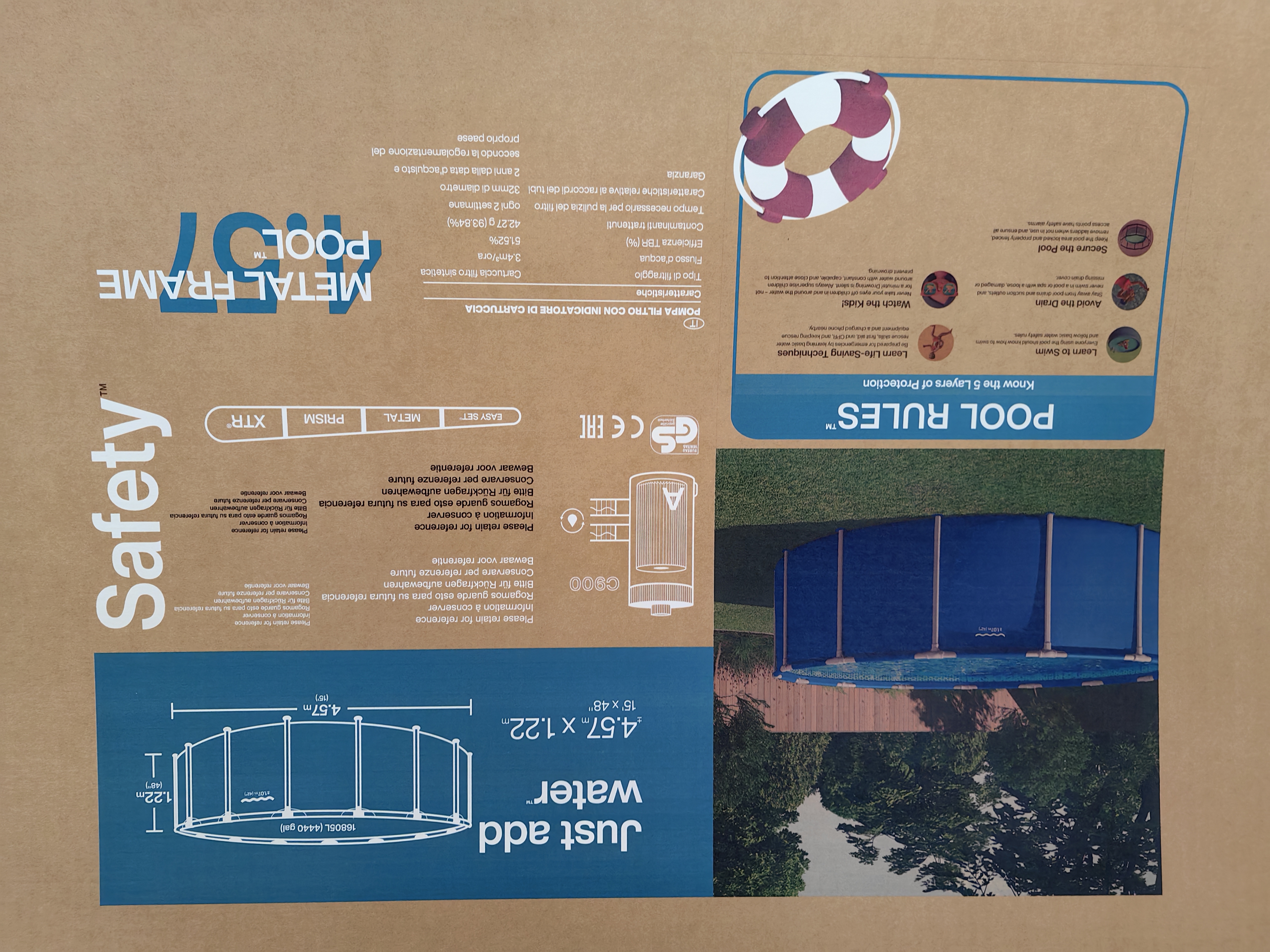
Conduct simultaneous tests on 2 mm thin corrugated sheets and 7 mm thick hollow boards. Thick boards absorb far more ink and demand higher white ink ejection volume from printers. Many machines deliver acceptable results on thin sheets but suffer substrate show-through when printing large-area graphics on thick boards.
The Yili PJS2800 digital corrugated printer enables adjustable ink droplet ejection volume to accommodate boards of varying thicknesses, delivering consistent hiding performance across thin and thick substrates alike.
II. Judge Underlying Hiding Power Performance by Machine Hardware
You can predict hiding capability just by examining hardware before test printing—four critical configurations are indispensable:
1. Independent Dedicated White Ink Printhead Channel
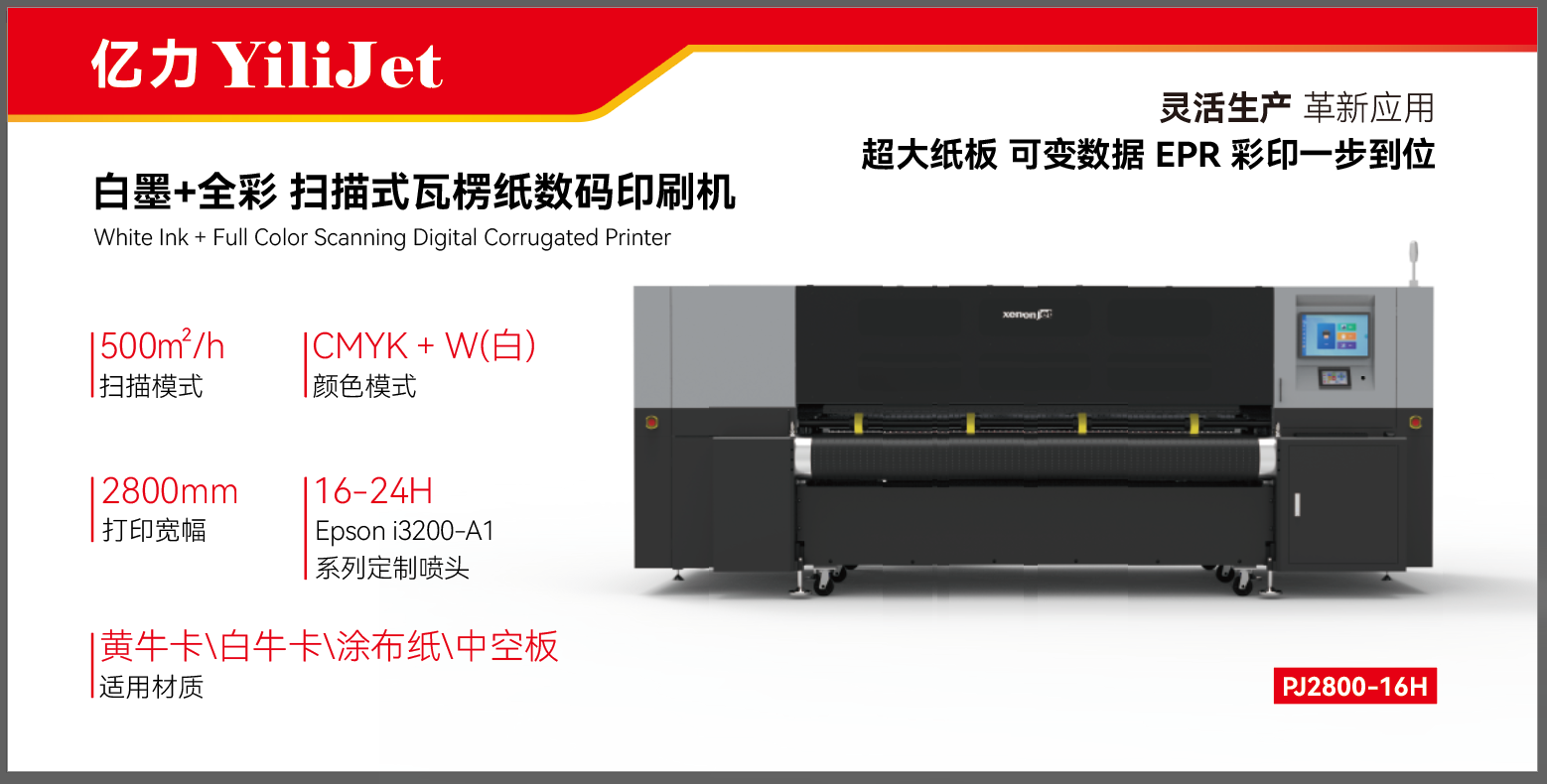
Qualified machines are fitted with a separate set of printheads exclusively for white ink to ensure sufficient ink output. The Yili PJS2800 Full-Color & White Ink Digital Corrugated Printer adopts an independent 5-group printhead assembly (CMYK+W), with a dedicated, separately operating channel for white ink printing.
2. Built-In White Ink Internal Circulation System
Titanium dioxide particles, the primary component of white ink, are prone to sedimentation. Without a continuous-stirring internal circulation system, long-term static storage causes ink settlement and stratification, leading to inconsistent ink concentration, erratic hiding power, and frequent printhead clogging or ink breakage during printing. A stable internal circulation system maintains constant ink concentration through continuous agitation, delivering consistent, long-lasting hiding power.
3. Multi-Layer White Ink Overprinting Program
The machine’s operating system must support multi-layer white ink overprinting, automatically laying down multiple white ink layers for dark substrates. Entry-level simplified machines only support single-layer white ink printing, which inevitably results in substrate show-through on dark boards.
4. Precise Ink Droplet Control by Printheads
Genuine Epson i3200 printheads support variable ink droplet technology: large droplets rapidly form an opaque base layer, while tiny droplets render fine graphic details, balancing superior hiding power and sharp print definition. Unscrupulous merchants sometimes use refurbished printheads with uncontrollable ink droplet output—either insufficient ink volume causes ink seepage, or excessive ink piles up and warps the board surface.

III. Matching Ink Formulation Also Impacts Hiding Performance
Even machines with top-tier hardware suffer drastically reduced hiding power when paired with low-grade white ink featuring low pigment content. As an original manufacturer specializing in digital inkjet technology for 19 years, Yili supplies proprietary high-concentration white ink with abundant pigment fillers, delivering superior hiding performance at the same ink volume compared with generic low-cost white ink on the market. Yili’s original white ink works in tandem with the machine’s circulation system to minimize sedimentation and sustain stable hiding power.
IV. Summary of Purchase Pitfall Avoidance
To accurately verify whether a machine’s white ink hiding power meets standards: prioritize testing on dark yellow kraft corrugated boards and inspect full-sheet white ink uniformity. Additionally, confirm the machine is equipped with an independent white ink channel and built-in white ink internal circulation system.
Substandard hiding power not only inflates consumable costs but also erodes customer trust and costs high-margin brand printing orders. Prioritize printers featuring independent white ink channels, white ink internal circulation systems, multi-layer white ink overprinting functionality, and high-hiding matching ink—such as the Yili PJS2800 Full-Color & White Ink Digital Corrugated Printer.
It enables synchronous white and color printing with robust white ink hiding power for crisp, vivid prints. Its integrated white ink circulation system maintains uniform ink composition and consistent hiding coverage while mitigating printhead clogging risks at the source, paired with optimized multi-layer white ink printing software. The hiding performance is plainly visible during on-site sample testing. Every unit undergoes strict pre-delivery quality inspection to ensure stable mass production immediately upon delivery to customers.

